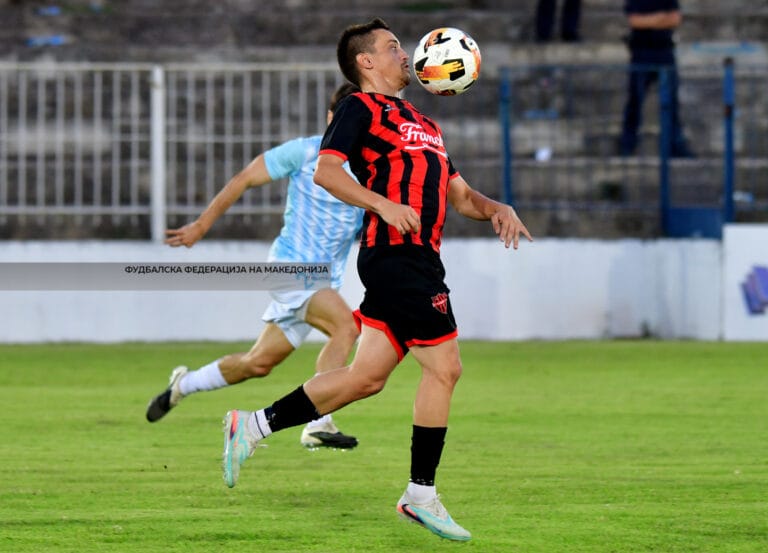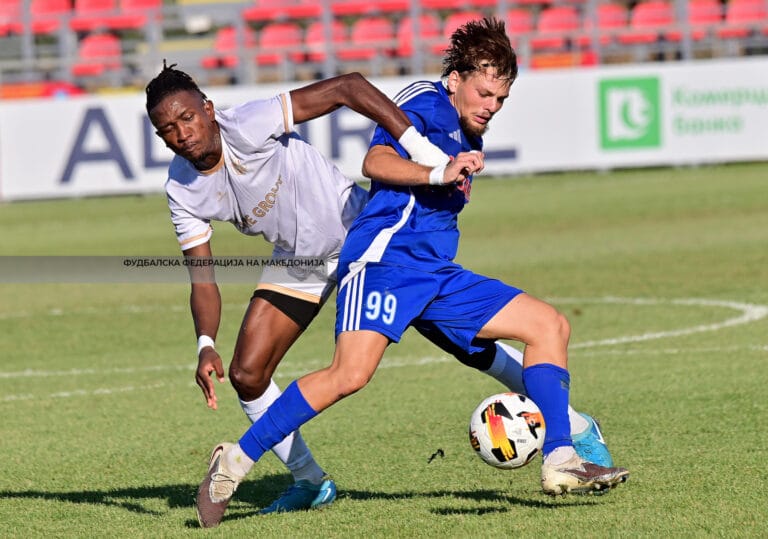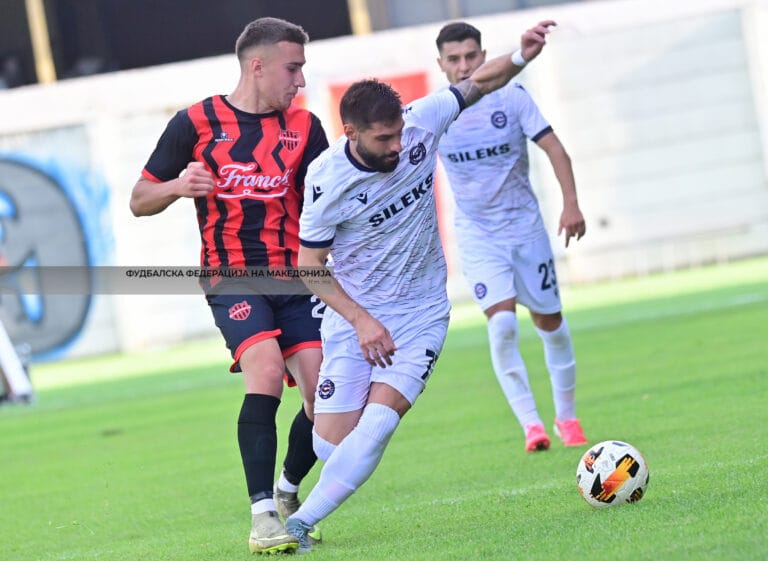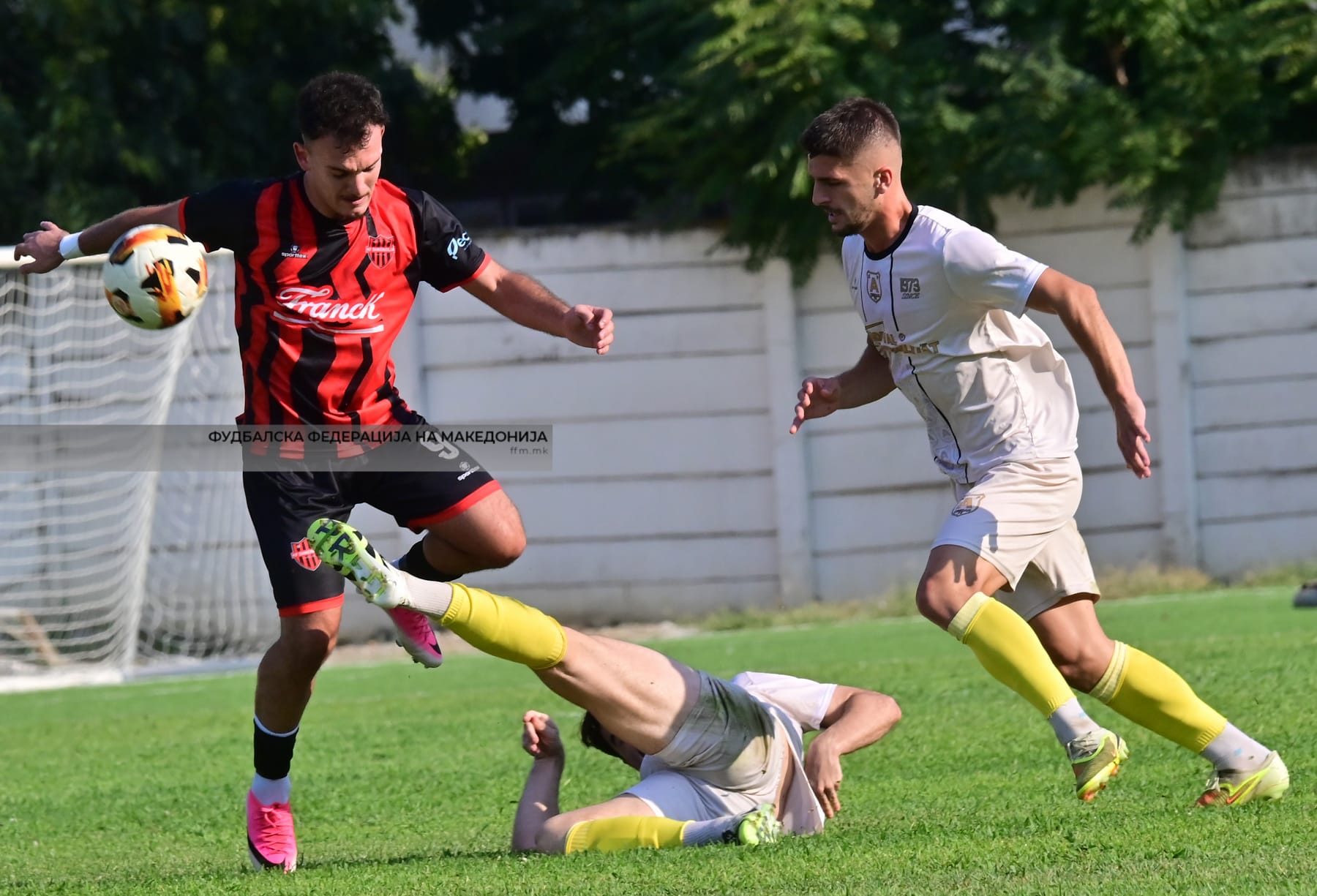
In the fourth-round match of the First MFL, played at the stadium in Čair between FC Shkëndija Aračinovo and FC Aresimi, two key and particularly challenging situations for refereeing assessment were observed. In both cases, the referee made completely correct decisions, which, following the checks carried out in accordance with the VAR protocol and the established intervention threshold, were correctly confirmed by the VAR referees as well.
In the 43rd minute of the match, the home team's attacker wearing number 30, while making an advance into the visiting team's penalty area, is facing away from the opponents' goal and does not have full control of the ball. Aware of the presence of the defender wearing number 16, the attacker uses the minimal contact, exaggerates its impact and attempts to win a penalty. The referee is in close proximity, has a clear viewing angle and full control of the situation, and therefore correctly assesses that the contact does not constitute an offence warranting a penalty and allows play to continue. Following the VAR check, in accordance with the protocol and the intervention criteria, it was correctly established that the referee's decision did not constitute a clear and obvious error. Therefore, there was no basis for VAR intervention, and the initial decision fully and justifiably remains in force.
The second challenging situation occurred in the 82nd minute, in the wide area of the visiting team's penalty area. Following a ball played from the side across the face of goal, the defender wearing number 16 attempts to block its direction with a natural football movement of his body. The ball strikes the player's arm, which is in a natural position, close to the body, and does not make his body unnaturally bigger. The player does not move his arm towards the ball, nor is there any action that, under the Laws of the Game, would be considered punishable handball. In this situation too, the referee correctly assesses that there is no offence warranting a penalty. Following the VAR check, in accordance with the VAR protocol and the established intervention threshold, his decision was correctly confirmed.
The Football Federation of Macedonia emphasises that these two refereeing situations, as well as any other decision made during a match, cannot and must not constitute justification or an alibi for unsporting, improper, vulgar, aggressive or any other impermissible behaviour.
Physical actions directed at opposing players and representatives of the visiting team are particularly unacceptable, as are insults, threats and verbal attacks against the referees and other officials. At the same time, serious organisational failures were also identified. Such conduct is contrary to the regulations and competition rules and must not and will not be tolerated.
The reports of the match officials will be reviewed regarding all the incidents, after which the competent bodies of the FFM will act strictly, formally and fully in accordance with the applicable regulations.
Responsibility for such behaviour cannot be relativised, nor shifted onto the referees by challenging correctly made decisions. Every result, including every defeat, should be analysed objectively and accepted in a sporting and dignified manner. This is especially expected of club representatives and players, whose conduct carries an additional responsibility to protect the integrity of the competition and the reputation of Macedonian football.
The FFM has been and will remain fully transparent with regard to the expert analysis and correctness of key refereeing decisions. Therefore, we extend an open invitation to an authorised representative of the management of FC Shkëndija Aračinovo to visit the FFM VAR Centre, where the two situations will be presented and professionally explained to him on the basis of the Laws of the Game, the VAR protocol and the official criteria for refereeing assessment and intervention.
The facts and the rules are the only relevant basis for assessing refereeing decisions, not emotions, pressure or subjective interpretations prompted by the final result.